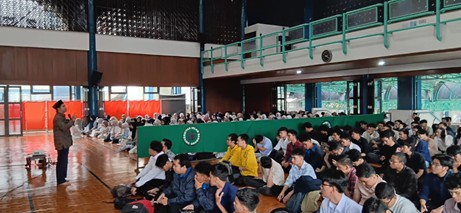
BISNISREAL.COM, GARUT — On Thursday, January 29, 2026, the quiet landscapes of Caringin and Mekarmukti districts witnessed a powerful display of youth leadership. Hundreds of students from MA Persis Tarogong arrived not just as visitors, but as agents of change under the Jam’iyyah Service Training Program (PLKJ).
This program is a cornerstone of the school’s curriculum, designed to immerse students in the realities of social and religious service. This year, the focus was clear: to provide tangible support to 11 different villages across two districts.
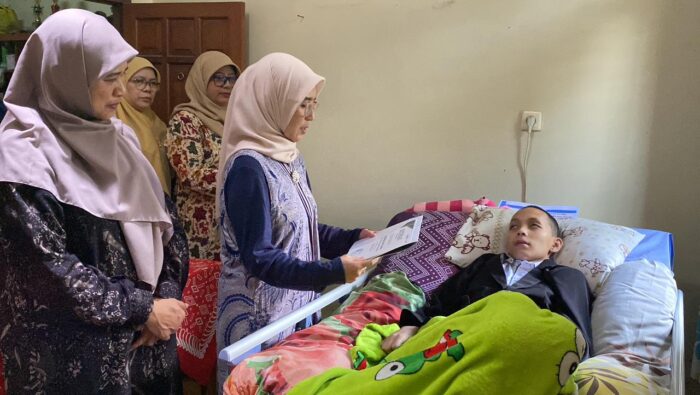
A Mission Driven by Initiative What sets this social service apart is its origin. The aid—ranging from 630 copies of the Holy Qur’an to 66 rolls of prayer carpets—was the result of the students’ own fundraising efforts. They reached out to sponsors, coordinated with donors, and managed the logistics of distributing 100 PJU units, 210 Iqra books, and various prayer garments like mukenas and kopiahs.
- Aan Adam, Lc., Principal of MA Persis Tarogong, reminded the students that the essence of PLKJ lies in the intention. “Do not look at the size of the donation, but at the sincerity and dedication behind it,” he stated.
Impact Beyond Material Goods The local authorities were deeply moved by the students’ involvement. Caringin District Head, Ujang Kuswara, noted that the students did more than just hand out supplies; they taught in local schools and assisted communities affected by natural disasters. Meanwhile, Eko Hartanto, the District Head of Mekarmukti, highlighted how rare it is for youth programs to provide such comprehensive facility upgrades. He urged the students to appreciate their education, as many children in remote Mekarmukti still face significant barriers to schooling.
The Power of Partnership This massive undertaking was made possible by an impressive roster of sponsors, including Bank Syariah Indonesia, Rumah Zakat, and many private enterprises like PT Calysta Prima Estetik and Chocodot. This collaboration between the school, parents, and the private sector underscores a shared vision of community building.
Conclusion The 2026 PLKJ social service is a testament to the fact that when young people are given the responsibility to lead, they can bridge the gap between urban resources and rural needs. It is more than a graduation requirement; it is a lesson in humanity that will stay with these students long after they leave the villages of Caringin and Mekarmukti.